It’s not all in your head. It’s by design.
Recently, I was walking downtown and ran into a couple of women taking photos with a vase. Their hair was perfect, their skin was flawless, and they were talking about the lighting for their Instagram shot.
Yep. They were influencers.
And I took a look at the two of them and realized something: I couldn’t tell the two apart. Granted, I have facial blindness so that’s not such a big deal. However, I couldn’t even tell them apart by their hair.
Online, it’s common knowledge that influencers have started to all look the same.

I will be honest. I have no idea who any of these women are. If I don’t know them personally and see their names, I won’t be able to tell you who they are. However, they are wealthy and famous and gorgeous.
And they all look identical. It’s become a discussion point online, even getting to the point where major magazines like HuffPo mention it. The truth is that Insta-influencing is fairly clogged with people who look the same.
It’s also starting to spread to TikTok — though, to that platform’s credit, people tend to have to upload video content that actually goes beyond looking good.
So, what’s the deal? It’s an industry secret…

I’ll let you into a little secret I learned back when I was a model: models were not chosen for being unique. Contrary to popular belief, models don’t really stand out from a crowd most of the time.
If you were to pass Kate Moss down the street, you probably wouldn’t realize it’s her. Most celebrities in fashion are unrecognizable outside of their fits.
It’s not just a women’s thing. Fashion has a weird way of pushing people who are gorgeous yet nondescript. I sure as hell didn’t recognize Christian from America’s Next Top Model when I met him!
The models you tend to recognize the most are the ones in adult films because that’s where you want to stand out.

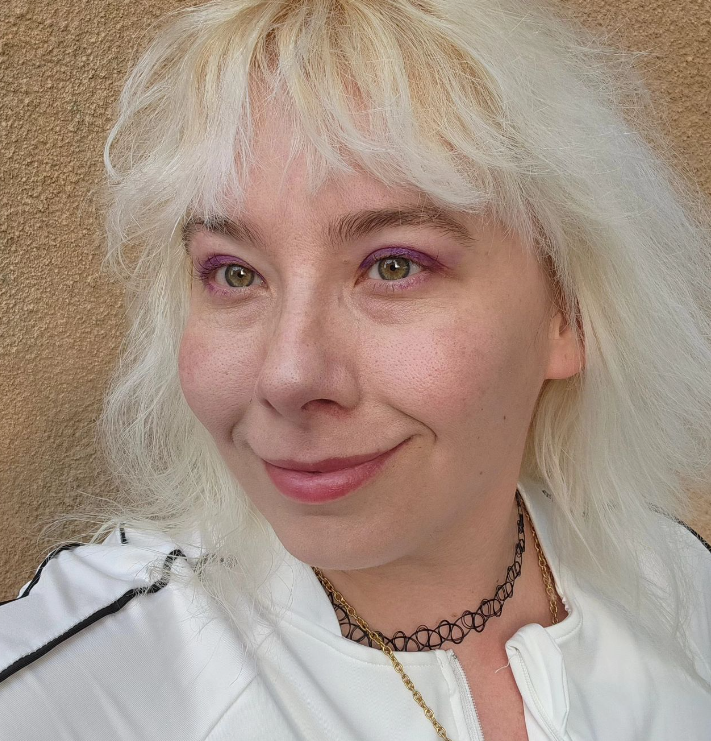
This leads me to tell you a little story about my life. I had just finished up the photoshoot that included this submission above. It was submitted (but not successfully added) to Vogue Italy.
At that point, I was working hard on being a fashion model. Like, I was getting paid gigs. However, I was not really getting anywhere — and my height only made up for some of the issue.
There was a glass ceiling that, at first glance, shouldn’t be there. I was 5’8, a size 00 (and occasionally fit into children’s clothing), was white, had light-colored eyes and decent skin and teeth. What gives?
I spoke to a booking agent for an adult talent agency.
I didn’t like what he said, but damn it, he’s right.
He told me, “Look. You’re not going to make it there, even with the figure of Kate Moss. The mainstream industry is looking for women who are generic, but upgraded from the average woman. You have a very distinctive face. You stand out too much. That’s great for porn, though!”
You see, there’s a secret that marketing agencies have picked up on: people buy products from models and influencers that look like an idealistic version of them. A successful model looks beautiful, stunning, and oddly relatable.
She’s just within reach, even though it’s clear that she’s not within reach. She could be you. You could be her. Kinda. It subconsciously makes you yearn for being part of the “cool crowd.”
Take a close look at fashion, makeup, and lifestyle influencers today, and you’ll notice something strange.

Take a look at the photo of me above. This was taken in the late 2000s when I was 90 pounds lighter. I’m clearly white as a goddamn sack of bleach here. I’m also bone thin here. This was the norm back then. It’s not now — much to the relief of humanity.
But that switch is not the sunshine and joy that you think it is. While models are now far more varied today, the truth is that this change comes with a lot of strings attached.
Racially ambiguous is so hot right now. — Probably Mugatu
Has anyone else noticed how many influencers seem racially ambiguous these days? It’s refreshing, for sure, because in a weird way, it means that we’re getting more inclusive about our beauty standards.
Most of these influencers above can pass for white, Latina, Middle Eastern, or even Asian. Some might even argue that they could pass for a light-skinned Black woman. Yay! Equality, right? Kinda.
It’s not done for the good of people’s hearts. It’s done because marketers realized that there are growing markets in the BIPOC circuit — not because they care about inclusivity.
This is why it’s still very rare to see dark-skinned influencers make the same amount of money as their lighter-skinned counterparts. They aren’t generic enough for many marketers to feel comfortable using them.
This is why dark-skinned influencers are almost always used to promote Black products, not mainstream white products. Racism is still at play, even if it seems muted to casual observers.
Having that plausible deniability of “is she BIPOC, isn’t she BIPOC?” makes it easier to cast a broader net of buyers. It makes it easier for one model to attract far more buyers with one photoshoot.
Class is in play, too.
It’s not just a matter of carefully boosting women who have a racially ambiguous look. It’s also the specific look that a face filled with Botox, fillers, and upgrades has.
Those things? They cost money. I speak as a Botox junkie who also is saving up for a lip flip. They also require maintenance. At the end of the day, most of those influencers spend at least eight hours a month at salons and medspas because maintenance is so high.
Whether we want to admit it or not, that’s a low-key sign of wealth in our society. Influencers are exaggerating their plastic as a way to subtly show that they can afford it — a status symbol in a world where paying rent is hard enough.
You might not realize it, but those injections add a certain subtle message of, “I’m richer than you. Don’t you want to be me?”
Error 404: personality not found.
Along with having similar faces, there’s another thing you might have noticed about most Insta-influencers. You might have noticed that you consume their content, but you still don’t know anything about them.
You might know they’re moms. You might see them cook a meal, or do a surfing trick, or even talk about how they do their skincare routine. However, you might have noticed that they don’t show truly intimate moments online.
Most influencers keep their problems generic, light, and simple. They don’t talk about the rush of work you have to do for a shoot, how you might have creeps hitting you up with fake opportunities, or the nightmare that comes with people picking apart your body.
This is by design. By keeping their personalities and problems generic, influencers make it easier for them to be relatable to large audiences. Think about it: universal problems are easy to relate to. Specific, heavy problems? Not so much.
Influencers make it feel like you know them, both via content and their quotes. Don’t be fooled. At the end of the day, you don’t know them. You just know the images they make and the way they look good on a beach in Miami.
At the end of the day, influencing is a career and a skill set.
Instagram influencers are the new models. They’re the new gossip column sweethearts of yore. And you know what? That’s fine. They should get that money if they can.
People don’t realize how hard it is to pose in front of a camera, get paid gigs, and keep your personality internet-friendly. It’s a lot more work than people let it on to be.
You might be wondering why I wrote that article if I’m cool with influencers. It’s simple. I just want to point out that the modeling industry didn’t change. It’s still exclusive.
Influencing is still an industry that treasures versatility, the “idealized customer profile,” and keeping its models just out of reach for the basic person.
Whether viewers realize it or not, you’re being sold to. What you see on the ‘gram isn’t real. It’s there to make you part with your money. Whether it’s something you want to pursue, though, is your call.


Leave a Reply